Image
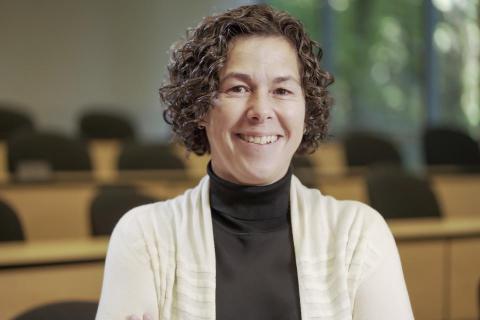
Beth Bechky, Professor and Stephen G. Newberry Chair in Leadership at UC Davis Graduate School of Management
Friday, February 13th, 2026 1:30 - 3:00pm
Large-language models and generative AI are at the center of great uncertainty in Hollywood – cautious optimism about the possibilities of AI mingle with fear and existential concern about the future of jobs, industry structure, and creative output writ large. Drawing on preliminary analysis of over 100 ethnographic interviews with screenwriters at all career stages, this talk will explore the current experience of screenwriters attempting to navigate a changing industry. Screenwriters are a cornerstone of cultural production: their stories simultaneously generate, reflect, and question ideas about how humanity understands itself. However, as storytellers they are both core to the business of entertainment and are subject to the industry’s drive for profit and vagaries of change. For decades, screenwriters enjoyed semi-stable and lucrative careers working collaboratively in writing rooms for television or individually writing and revising scripts for feature films. The advent of streaming upended this fragile stability. And the current focus on generative AI and data analytics tools may reshape how stories are told, who tells them, how labor is compensated, and the structure of the industry. Many examinations of AI and organizations focus on its use as a tool that can either replace or augment humans. Our preliminary findings suggest that understanding the impact of AI on workplaces requires unpacking the ecosystem around work. What is under threat in Hollywood with the introduction of AI goes beyond its use in tasks to the structures, relationships and nature of the work itself.
As an organizational ethnographer, Professor Beth Bechky’s research reveals the technical complexity of the modern workplace. Bechky’s recent book, "Blood, Powder and Residue: How Crime Labs Translate Evidence into Proof," was published by Princeton University Press. In it, she shows how the work of forensic scientists is fraught with the tensions of serving justice—constantly having to anticipate the expectations of the world of law and the assumptions of the public—while also staying true to their scientific ideals. Bechky studies how workers collaborate to solve problems, struggle to coordinate, and manage the challenges of technological change. In addition to her in-depth engagement in a crime lab, in previous projects she locked up sets and made copies as a production assistant in the film industry, assembled semiconductor equipment in a clean room, and assisted technicians in a biotech lab.